

How To Put Toyota 4Runner In 4 Wheel Drive
If you own a Toyota 4Runner, knowing how to engage its 4-wheel drive can make all the difference when you hit rough terrain or slippery roads. You might wonder when and how exactly to switch it on for the best control and safety.
This guide will walk you through simple steps to put your 4Runner into 4-wheel drive quickly and confidently. By the end, you’ll feel ready to tackle any road with ease. Keep reading to unlock the full potential of your Toyota 4Runner’s 4WD system.
Types Of 4wd In Toyota 4runner
The Toyota 4Runner offers different types of 4-wheel drive systems. These systems help improve traction and control on rough or slippery roads. Knowing the types of 4WD can help you use your 4Runner better.
Each 4WD system suits different driving needs. Some work well for off-road adventures. Others provide better handling on paved roads. Understanding these options helps you pick the right mode for your trip.
Part-time Vs Full-time 4wd
Part-time 4WD means you switch between 2WD and 4WD. Use 2WD on dry roads to save fuel. Turn on 4WD when driving on snow, mud, or dirt. This system prevents damage to the drivetrain on hard surfaces.
Full-time 4WD sends power to all wheels all the time. It works on any road condition without switching modes. This system offers better stability and traction on wet or slippery roads. It is easier to use but may use more fuel.
Manual Vs Electronic Shift
Manual shift 4WD requires you to move a lever to change modes. This system gives you full control over when to engage 4WD. It feels more connected to the vehicle’s mechanics.
Electronic shift 4WD uses buttons or switches to change modes. It is quick and easy to use, even while driving. This system often includes automatic settings for different terrains.
Locating The 4wd Controls
Finding the 4WD controls in your Toyota 4Runner is the first step to engaging four-wheel drive. The controls are designed for easy access and clear use. Knowing their exact location helps you switch modes quickly and safely. This section breaks down where to find these controls and how they work.
Shift Lever Position
The shift lever is usually near the center console. It shows different gear options like Park, Reverse, Neutral, and Drive. In many 4Runner models, the 4WD options appear on this lever. You may see labels like 2H, 4H, and 4L. These stand for two-wheel drive high, four-wheel drive high, and four-wheel drive low. Moving the lever to these positions changes the drive mode.
4wd Selector Dial
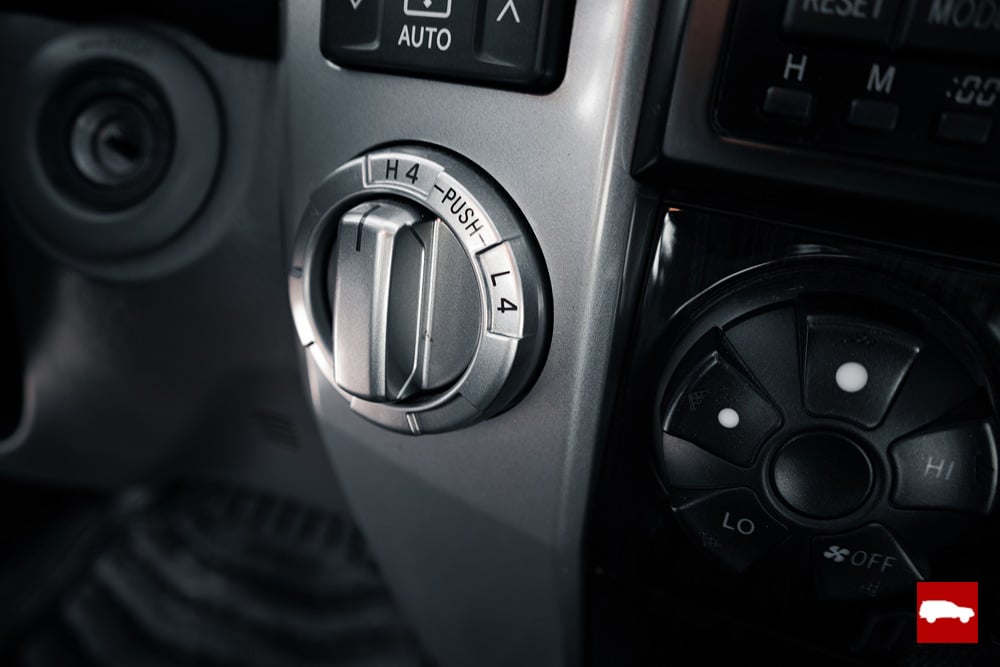
Some Toyota 4Runners have a 4WD selector dial instead of shift lever options. This dial sits near the gear shift or on the dashboard. It usually has clear markings for 2H, 4H, and 4L. Turning the dial lets you choose your driving mode smoothly. This type of control is simple and quick to use, even while driving.
Engaging 4wd High
Engaging 4WD High on your Toyota 4Runner is simple and useful. This setting helps your vehicle handle slippery roads and light off-road conditions. It provides power to all four wheels, improving traction and control. Knowing how and when to use 4WD High keeps your drive safe and smooth.
When To Use 4wd High
Use 4WD High on wet, snowy, or icy roads. It works well on dirt or gravel paths too. This mode helps when the road is slippery but not too rough. Avoid using 4WD High on dry pavement to prevent damage. It is perfect for speeds up to 55 mph.
Step-by-step Activation
Start by stopping or driving slowly under 25 mph. Turn the 4WD control knob or lever to the 4H position. You may hear a click or feel the shift. The dashboard light will show 4WD High is active. Drive carefully and enjoy better traction on tough surfaces.

Credit: www.youtube.com
Engaging 4wd Low
Engaging 4WD Low in your Toyota 4Runner helps you drive through tough terrain. It provides extra power and control at low speeds. This mode is essential for climbing steep hills or moving through deep mud. It reduces the speed but increases the torque to the wheels. Use it carefully to avoid damaging the vehicle.
Situations For 4wd Low
Use 4WD Low on rough and steep trails. It works well in rocky or sandy areas. Deep mud and heavy snow are good cases too. It helps when towing heavy loads uphill. Avoid using 4WD Low on dry, flat roads. It can cause wear and waste fuel.
How To Shift Into 4wd Low
Bring your 4Runner to a complete stop. Keep your foot on the brake pedal. Shift the transmission into neutral. Turn the 4WD selector knob to “4LO.” Wait for the indicator light to confirm engagement. Shift back to drive or reverse as needed. Drive slowly and carefully while in 4WD Low.
Switching Back To 2wd
Switching your Toyota 4Runner back to 2WD is a simple but important step. Using 4WD on dry pavement can cause extra wear on the vehicle. It also lowers fuel efficiency. Knowing how to switch safely protects your 4Runner and improves driving comfort.
Safe Conditions For Disengaging 4wd
Disengage 4WD only on dry, smooth roads. Avoid switching while driving on slippery or rough surfaces. The wheels need to roll freely to prevent damage. Do not switch at high speeds. A slow, steady speed is best for changing modes.
Stop the vehicle if possible before switching. This helps the transfer case shift smoothly. Check your owner’s manual for exact speed limits. Following these guidelines keeps your 4Runner’s drivetrain safe.
Procedure To Return To 2wd
Start by slowing your 4Runner to about 3 to 5 mph. Keep the transmission in neutral or park. Turn the 4WD selector knob or lever to 2WD. You may hear a slight click or feel a small shift. This means the system is changing modes.
Once switched, gently accelerate and check for normal driving feel. If the vehicle pulls or makes noise, stop and try again. Regularly switching between 4WD and 2WD keeps your system working well. Practice this process to make it quick and smooth.
Common Issues And Tips
Using 4 wheel drive on your Toyota 4Runner can be very helpful on rough roads. Still, some common issues may occur when switching to 4WD. Knowing these problems helps you avoid damage and keep your vehicle working well.
Below are some common issues and useful tips for using 4WD correctly.
4wd Indicator Light Problems
The 4WD indicator light shows if the system is active. Sometimes, the light may not turn on or stay blinking. This can mean a sensor problem or a connection issue.
Check the fuse and wiring first. Dirt or moisture can cause bad signals. If the light does not work, visit a mechanic to avoid driving in unsafe conditions.
Avoiding Damage To The Drivetrain
Switching 4WD at high speeds can harm the drivetrain. Always stop or slow down before changing modes. This protects gears and differentials from damage.
Use 4WD only on slippery or uneven roads. Driving on dry pavement in 4WD may cause extra wear. Regular maintenance helps keep the system in good shape.
Maintenance For 4wd System
Maintaining the 4WD system in your Toyota 4Runner is crucial. It keeps the system working well and extends its life. Regular care helps avoid costly repairs and keeps your vehicle safe on rough roads.
Regular Fluid Checks
Fluids in the 4WD system need checking often. These include transfer case oil and differential fluid. Clean, proper fluid levels stop parts from wearing out fast. Use the type of fluid recommended in your owner’s manual.
Check for leaks or dirty fluids during every oil change. Changing fluids on time keeps the system running smoothly. It also protects gears and bearings from damage.
Scheduled Inspections
Have a mechanic inspect the 4WD system regularly. They check for wear in parts like axles, driveshafts, and joints. Inspections help spot problems early before they get worse.
Follow the service schedule in your Toyota 4Runner manual. Routine checks keep the 4WD system reliable. They ensure your vehicle performs well in tough conditions.
Credit: canadiangearhead.com
Frequently Asked Questions
How Do I Engage 4wd In A Toyota 4runner?
To engage 4WD, shift the transfer case lever or turn the dial to 4H or 4L. Follow your model’s specific instructions for smooth operation.
When Should I Use 4wd High Versus 4wd Low?
Use 4WD High for slippery roads and mild off-roading. Use 4WD Low for steep, rough terrain and heavy towing at low speeds.
Can I Switch To 4wd While Driving?
Yes, you can shift to 4WD High while driving at low speeds. However, switch to 4WD Low only when stopped or moving very slowly.
What Are Signs My 4wd System Isn’t Working?
If you hear unusual noises, experience poor traction, or the 4WD indicator doesn’t light up, your system may need inspection or repair.
Conclusion
Driving your Toyota 4Runner in 4-wheel drive helps you handle tough roads better. Engaging 4WD is simple once you know the steps. Take your time to practice using the controls safely. This skill improves your vehicle’s grip on slippery or rough surfaces.
Always check your owner’s manual for specific instructions. Remember, using 4WD correctly keeps you safer on challenging terrain. Now, you are ready to drive with more confidence and control.


